Woordify
Action

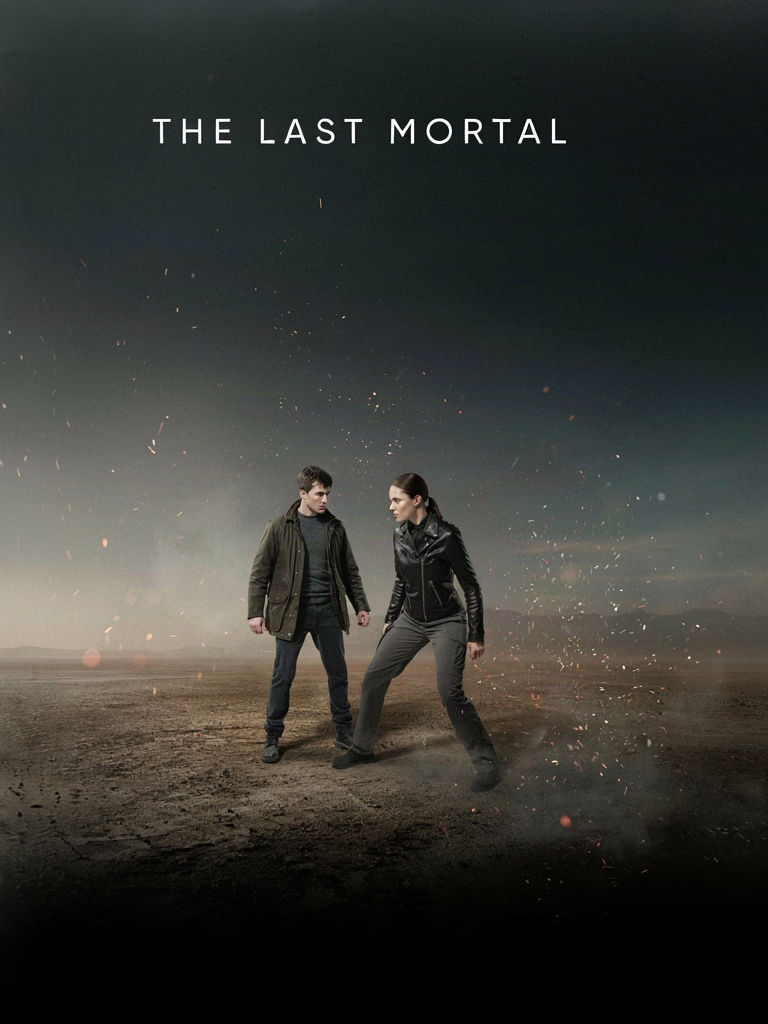
The Last Mortal

A world cured death — now two of the last mortals fight to give it back, and with it, God, grief, and the end of time.

started by cgbal

How this works
  • 📖 Read top to bottom — the path voted as canon.
  • Vote scenes; votes decide the canonical path.
  • ✍️ Add the next scene — up to 5 per scene, top vote wins.
  • 🔒 Older scenes lock into canon as the story moves on.
·Highlight role:AllDialogueWorldbuilderDramaturgEditor

The Cemetery of the Immortals Pitch-black darkness. Only the faint, powerless glow of distant city lights manages to pierce the night. A heavy, suffocating silence reigns. In the ruined, abandoned cemetery—overgrown with wild weeds—just a single headstone still stands. Its inscription reads simply: "MORTAL HUMAN: 2042." No one comes here anymore. No one’s path ever leads to this graveyard. Once, we thought death was a disaster. We spent billions to conquer it, waged wars, defied God. And in the end, we won. The day we stopped cellular aging, we thought it was humanity’s greatest triumph. Or so we believed. An overcrowded subway car. People packed shoulder to shoulder, barely room to breathe. But there’s something strange about this crowd: everyone looks flawless. Smooth skin, strong bodies—each one appears to be in their late twenties or early thirties. No elderly, no children, not even the scent of a baby... And in everyone’s eyes, a bottomless, vacant dullness. No one speaks. Everyone’s lost in their smart glasses or the floating virtual screens before them. Aras (320 years old, but looks 28) is wedged among this soulless crowd. But there’s something in his eyes the others lack: a restless searching, a spark. Just then, above the subway doors, a digital display flashes blood-red letters: > WORLD POPULATION: 45 BILLION. NEW BIRTH PERMITS SUSPENDED. In a world where no one dies, no one is allowed to be born. When time loses its meaning, every day becomes a perfect copy of the last. Love never ends, but the thrill, the magic, is gone. Careers never finish, but there are no more rungs left to climb. We killed death... and in return, we sacrificed our future. Aras sits in his minimalist, nearly empty apartment. A giant digital clock on the wall ticks forward—not backward—racing ahead at a dizzying pace, a symbol of time spent but going nowhere. Aras pulls a hidden, old medical journal from his drawer. Its pages are yellowed, carrying the scent of the past. Tucked between the pages is a photograph: his mother, who died "of old age" years ago, before the system took hold. Aras’s fingers tremble as he touches her face. Just then, a sharp knock at the door. In this age, it’s almost unthinkable—no one knocks unannounced anymore. Startled, Aras stands and opens the door. Standing outside, breathless and wrapped in an old trench coat, is a woman: Leyla (250 years old). There’s no trace of that subway dullness in her eyes; instead, they blaze with fear and wild excitement. In her hand, a syringe filled with a glowing black liquid. LEYLA (whispering, breathless) "I found it, Aras... I found the way to crash the system. The way to make us mortal again. They’re after me—let me in." From deep within the city, the sirens of the Immortality Guards begin to wail. As the sound draws closer, Aras hesitates for a moment, glancing first at Leyla, then at the black liquid in her hand.
cgbalEditor
▸ branch from here
Show 7 earlier scenes of the story

This liquid didn’t just promise a biological end; it was an explosive force powerful enough to shatter the “chains of faith” that had been buried, forgotten, and paved over for centuries. The end of death itself had paralyzed the philosophies of religions and the very future of the human soul. But now, those old whispers were stirring again. As Aras stared at the syringe, he could almost hear the murmurs of those small, hidden communities scattered across the city—groups that had retreated underground, waiting in silence for this very day for centuries: An Ancient Remembrance. For those who gathered in the ruins of collapsed churches and secret prayer rooms beneath the city, this syringe wasn’t a disaster—it was the key to the Promised Day. To them, immortality was the greatest sin against the order of God; it had turned man into an idol and the world into an endless purgatory, a prison with no escape. The black liquid in Leyla’s hand was the only door left for the soul to break free from the body and finally reach divine justice, to find that absolute balance between heaven and hell. “At last,” they would whisper when the news reached them, “at last, Judgment Day is near.” But for the Neo-Buddhist and Hindu communities meditating in the shadows of the city’s neon-lit skyscrapers, the situation was even more dire. For them, this artificial immortality was a terrifying “Samsara Lock”—a cosmic stalling of the soul’s journey. Karma had ground to a halt; souls could no longer be reborn into new bodies, could not cleanse their old sins, could not reach Nirvana. This syringe would set that immense, rusted cosmic wheel turning again, shattering the chains that bound souls and releasing them into new lives, perhaps even toward that universal redemption they longed for. Leyla leaned back against the wall, catching her breath as the red glow of searchlights crept through the windows of the minimalist apartment. The guards’ mechanical footsteps echoed on the building’s stairwell. She placed the syringe in Aras’s trembling hand. “This isn’t just an antidote, Aras,” she said, locking eyes with him. “It’s a chance to give humanity back its God, its faith, and the afterlife it fears but desperately needs. Now tell me—are you ready to save us, and the world, from this immortal hell?”

cgbalEditor
▸ branch from here

As Aras felt the chill of the black liquid in his palm, mechanical noises from outside rattled the walls. The guards’ announcement—“Law for the Preservation of Eternal Life: Open the Door!”—echoed through the room like the ticking of a clock. But the noise inside Aras’s mind was far louder than anything outside. The syringe in his hand wasn’t just a tool to halt a biological mechanism; it was the fuse for a colossal metaphysical revolution, frozen for centuries and buried beneath layers of modern medicine and law. He grabbed Leyla by the arm and pulled her toward the darkest corner of the apartment, to the hidden compartment where his mother had stashed her yellowed medical journal. As red searchlights swept across the room, Aras whispered, “If we inject this into the system, Leyla, we won’t just be killing people. We’ll bring back the greatest fear and the greatest hope ever forgotten—the Day of Reckoning.” Two centuries ago, when scientists stopped aging, priests and theologians had faced an existential crisis. Without death, the “end” lost all meaning; heaven, hell, and divine justice dissolved in the sterile glow of laboratory tubes. Humanity had declared itself its own god. But now, everything was changing. The Apocalypse Awaited by the Faiths of One God In the city’s underground tunnels, the last Muslim and Christian communities, forced into hiding for opposing the system, had prayed for years for one thing: the return of death. For them, this artificial immortality was nothing but the false paradise promised by the Antichrist. Staring out the window at the towering skyscrapers, Aras thought: If this virus spreads, the Quran’s “Every soul shall taste death,” or the Bible’s prophecy, “The last enemy to be destroyed is death,” would be turned on their heads. Humanity would rebuild the divine tribunal it had torn down with its own hands. People would repent again, kneel again, and most importantly, beg for forgiveness. Because without death, sin had lost all its weight. Beneath the neon lights filtering through the apartment’s windows, the old factory buildings repurposed as Neo-Buddhist temples flickered in the distance. For them, this syringe was nothing less than a key to “Moksha”—liberation. Ever since the system had trapped souls in these flawless thirty-year-old bodies, the cosmic scales had been thrown off. Souls could neither ascend nor descend; the world had become a spiritual swamp. The antidote Leyla had found would strike the rusted wheel of Samsara with a hammer blow, setting it spinning once more. The apartment’s steel door shuddered as the guards battered it with hydraulic rams. Plaster dust rained from the walls as Leyla grabbed Aras by the collar. In her eyes burned the fanatical devotion of a disciple who, after centuries, had rediscovered her faith. “Aras! Listen to me!” she shook him. “The system told us ‘Death is an end, a void,’ and condemned us to this fake paradise. But death isn’t an end—it’s a doorway. We sealed that door in concrete. Now it’s time to blow it open. People need to remember they can die for faith in a Creator!” Aras raised the syringe. Under the red searchlights streaming into the room, the black liquid gleamed like a sacred chalice. This fluid wouldn’t just bring cemeteries back to the world; it would restore the soul, prayer, and transcendence that had been stolen from humanity. The door hinges exploded with a thunderous crack. The Immortality Guards stormed in, faces hidden behind mechanical masks. The laser sights of their weapons converged on Aras’s chest. The lead guard barked in a mechanical monotone: “Surrender the threat to eternal life. Do not become an accomplice to evolutionary crime.” Aras stood his ground, his mother’s old photograph in one hand, in the other the black syringe that would change the theological fate of all humankind. Behind him, Leyla began to whisper an ancient prayer...

cgbalEditor
▸ branch from here

The guards’ laser sights are fixed squarely on Aras’s chest. The Guard Leader’s heavy, drum-barreled weapon is charging up, ready to unleash a wave of biological shock. In the background, Leyla whispers an ancient prayer—perhaps the Samsara invocation for the turning of the wheel. Aras studies the guards’ faces behind their mechanical masks, the bio-sensor displays built into their helmets flickering with data. And in that moment, he sees it—the system’s fatal flaw: it has forgotten what death is. There’s no protocol for detecting biological death. Aras raises his hands as if surrendering, but in his right hand, he’s holding a syringe. Before the guards can react, he plunges the syringe not into his own chest, but into the main pipe of the apartment’s smart hydroponic water system at the center of the room, and empties every drop of the black liquid inside. Instantly, the fluid is sucked into the apartment’s ventilation and humidification system, spreading throughout the building. The moment the black liquid hits the air, it transforms—like a nanotech virus—into a thick, sticky, jet-black aerosol mist. The black fog blinds the thermal, infrared, and digital visors in the guards’ helmets. Their sensors freeze, flashing "Unknown Biological Threat." In the darkness and swirling mist, Aras grabs Leyla’s hand. He slams his fist into the panel of his massive digital clock—always set to infinite speed—sabotaging it. The clock’s screen explodes, and the building’s entire electrical system goes down. Through the fog, the sounds of Aras and Leyla choking can be heard, followed by the heavy thud of two bodies hitting the floor. When the guards rip off their masks and flick on their flashlights, they see Aras and Leyla lying motionless on the ground. But something horrifying has happened: the black liquid has seeped through their skin from the air, triggering the "Artificial Apocalypse Simulation." Aras and Leyla’s skin has lost its smoothness, wrinkling and graying in an instant—they look like two mortals at death’s door. Even more shocking, the guards’ bio-scans show their heart rates have plummeted to five beats per minute, their brain waves almost flatlining. For the first time in 320 years, the guards are witnessing humans on their deathbeds. The system’s algorithms crash. Their orders are to "capture any threat to eternal life," not "arrest the dying." To the system, a body condemned to death is nothing but "waste" or "data loss." GUARD LEADER (for the first time, his voice trembles with real, human fear) "Central... Biologos-4 malfunction. Targets... disappearing. System can’t read data. What... what is this?" Paralyzed by uncertainty, the guards watch in awe and terror as this miracle of "old age" unfolds before them. But Aras and Leyla know the truth: the liquid in the syringe has triggered a "temporary death/bio-stasis" mode. It hasn’t killed them—just frozen their biology for a few minutes, fooling the system into believing they’re dead so it will abandon them. As the guards, fearing they’ve contracted a "contagious death virus," retreat and prepare for quarantine, a group of masked figures in tattered clothes—the Underground Faith Resistance—blow open the vent in the back wall of the apartment. Out of the black mist, hands reach for Aras and Leyla, half-conscious and aged by the simulation. Like saints, they are carried into the darkness of the tunnels below—the darkness of freedom. By the time the guards return in full force, the room is empty. Only Aras’s old photograph of his mother lies on the floor, dropped in the chaos. And where the black liquid has dripped onto the photo, a glowing line of graffiti—like a verse written in fingertip—shines: "The cosmic wheel has turned. The gate is open." Aras and Leyla have struck back at the system with its own dogma of "life"—and escaped. Now they are underground, both mortal and the first prophets of a new world.

cgbalEditor
▸ branch from here

The raw, yellow light leaking from the lanterns of the underground faith rebels cast monstrous shadows on the damp tunnel walls. Aras and Leyla lay on makeshift tarps that looked like stretchers, gasping for breath like shipwreck survivors hauled from a stormy sea. The “aging simulation” triggered by the black liquid in the syringe was slowly wearing off, the artificial biostasis giving way to a jarring awakening. But what it left behind was horrifying: cells that had been smooth and painless for centuries now felt gravity, pressure, and lactic acid with every heartbeat—the mortal weight of flesh and bone. When Aras cracked his eyes open, he saw thick, rusted pipes snaking across the ceiling, draped with haphazard icons, scripture plaques, and mandala symbols. This was the polar opposite of the sterile world above—a theological junkyard, and yet, a sanctuary. The leader of the rebels surrounding them removed the old-fashioned gas mask from his face. It was Ishak—deeply wrinkled, beard gone white—the kind of true elder you’d never see aboveground. (Ninety years old, from the last generation never inducted into the system.) ISHAK (Whispering, listening to the slowing beat of Aras’s heart) “Time’s pulse is beating again… Do you hear it? While those above play god in their medical labs, you became the first cry leaking from the sacred womb. Welcome, mortals.” Leyla coughed, trying to sit up. The thick, damp air filling her lungs felt far more real than the sterile, scentless life in the metro. LEYLA “The guards… They think the serum will only hide us. But that aerosol mist—it’s spread through the ventilation shafts to the whole sector. They can’t stop it.” Just then, crackling voices began to rise from the battered tube monitors and hacked radios in the corner of the shelter. Chaos had erupted in the city above. In the blocks touched by the black mist, the faces of people—unchanged for three centuries—were suddenly marked by the first wrinkles, their hair streaked with gray. Computer systems, unable to process people dying or aging, froze with error messages: “System Error: Unidentified Biological Change.” A heated debate broke out inside the shelter. This underground community was anything but united; though they all opposed immortality, the meaning they gave to death’s return was wildly different. Muslim and Christian Rebels To them, Aras and Leyla were messengers of divine punishment and justice. “The reckoning is near—humanity will finally shed its arrogance and bow down!” they cried, their chants and prayers echoing through the tunnels. For them, this virus was the fire of truth, destined to burn down the false paradise. Buddhist and Hindu Mystics For these, it was cosmic justice. Anand, one of the group’s spiritual leaders, knelt beside Aras and traced his fingers along Aras’s graying skin. “You’ve fed blood to the rusted gears of Samsara,” he said with awe. “Now souls can move on. But be careful—the wheel may crush those beneath it as it turns.” But not everyone was pleased. Kaan, from the rebels’ military wing, loaded his old rifle with mechanical fury and loomed over Aras. KAAN “What do you think you’ve done? There are forty-five billion people up there! If this virus spreads worldwide and people start aging and dying overnight, do you know what’ll happen? No cemeteries, no coffins, not enough earth to bury the dead! That apocalypse your holy books talk about? It’ll be a logistical nightmare, literally!” As the argument escalated, a high-priority encrypted broadcast from the city above flashed onto the shelter’s main panel. The face on the screen, with flawless skin and ice-blue eyes, belonged to High Councilor Altan. He was speaking directly to the underground frequency. ALTAN (On screen, city lights flickering in panic behind him) “Aras… Leyla… I know you can hear me. You think you’re prophets, but what you’ve started isn’t an awakening—it’s mass suicide. The system can’t handle mortality. Right now, thousands are writhing in agony in Sector 3 because their bodies have forgotten how to feel pain. We have an offer. Give us the antidote formula, and we’ll grant legal recognition and freedom of worship to all underground faith communities. Otherwise, we’ll purge the tunnels with nuclear fallout.” As Altan’s message ended, the screen went black. The mechanical army of the Guardians was already encircling the entrances to the underground catacombs. The walls began to tremble, the thunder of footsteps above echoing through the tunnels.

cgbalEditor
▸ branch from here

Aras stared at the empty syringe casing in his hand. The black liquid was gone, but the chain reaction he’d set in motion had already poisoned—or awakened—minds both in the skyscrapers above and the temples buried deep underground. Leyla gripped Aras’s arm. In her eyes, fear of the death closing in mingled with the resolve of someone who knew there was no turning back. LEYLA “What do we do now, Aras? Do we go up there and give them their fears back, or do we stay here and let the apocalypse we started bury us?” The first explosion echoed from the end of the tunnel, shaking the stones loose. Through the billowing dust, the red laser sights of the Guards began to slice through the darkness.

cgbalEditor
▸ branch from here

With the force of the explosion, chunks of rock broke loose from the tunnel ceiling and crashed down onto Ishak’s ancient sacred tablets. The air, thick with dust and the reek of gunpowder, mingled with that nanotechnological black mist, turning the atmosphere suffocating and acidic. Laser beams sliced through the smoke, advancing toward the heart of the bunker. Aras couldn’t shake the image of Altan’s menacing face on the screen, or the echo of Kaan’s scream—“logistical catastrophe”—from his mind. Forty-five billion people… An entire humanity that had forgotten pain, that thought death was just a fairy tale, would, in a matter of seconds, be thrown into the jaws of age and decay. He hesitated; his fingers trembled around the injector casing. ARAS (voice cracking) “Leyla… This isn’t salvation. This… this could be a massacre. I was a child when my mother died in agony—does it make sense to unleash that pain on the whole world in a single breath?” Leyla, dragging her wounded leg, seized Aras by the collar. Tears streamed down her face, tracing the fine new lines that had appeared on her skin. The biological pain of her aging cells fused with the desperation in her voice. LEYLA “Are you hesitating? Look at us! While we feel our flesh melt away every second, are those above going to keep spinning forever, soulless as machines? If we stop now, they’ll bury us in these tunnels and humanity will never wake again! This pain is labor, Aras. There can be no new world without the agony of birth!” Kaan and the monotheist rebels met the first wave of Guards with homemade explosives, turning the bunker into a vision of hell. In the chaos, screams of pain mingled with cries for help. Some of the younger rebels, who hadn’t felt physical pain in three centuries, stared in shock at their bleeding wounds, not knowing what to do as shrapnel tore into them, their cries echoing in terror. It was the most hopeless sight the underground had ever witnessed. As Ishak collapsed from a laser blast to the chest, he gripped Aras’s hand with the last of his strength. Blood trickled from his mouth—a mortal death, the likes of which no one had seen for centuries. ISHAK (with a hoarse whisper) “Don’t be afraid… Let them see the soul leave the body… The city’s main water line… it’s behind this tunnel. Turn… the wheel…” Aras watched the light fade from Ishak’s eyes. Pure, primal, absolute death. His hesitation melted away, replaced by a deep sorrow and an inescapable sense of purpose. Together with Leyla, taking advantage of the chaos, he threw his weight against the massive, rusted door at the back of the bunker. Beyond it lay the main artery of the Central Water Distribution Network, the lifeblood of the city’s forty-five billion souls. Tons of water coursed through enormous pipes, pumping life to every skyscraper, every hydroponic farm, every home. Leyla pulled the last two large aerosol canisters—the pure culture of the black liquid—from her backpack. As she fitted them into the mainline’s injection valve, Aras’s hands still shook. He thought of every person above; the mothers, the lovers, the millions aching for children but denied the right to be born. The question hammered in his mind: Are we saving them, or damning them? ARAS “When we do this, the first deaths will start within hours, Leyla. Mothers will watch their children grow old. The world will become one vast graveyard.” LEYLA (closing her eyes, whispering) “And for the first time, flowers will bloom again in those graveyards, Aras. Press the button.” Aras took a deep breath, a single tear tracing down his cheek, and threw the main switch. With a colossal hiss, the black liquid surged into the city’s veins. Within seconds, a sound unlike any ever heard before began to rise from the city above—from the windows of skyscrapers, from subway tunnels, from the squares. It was not a siren, nor the roar of machinery. It was the cry of billions tasting pain, aging, and death all at once—the forgotten, primal, helpless wailing of humanity itself. The sound traveled seven stories underground, shaking the walls where Aras and Leyla stood. From Altan’s radio, the last transmissions of the Guards’ leader came through, choked with terror: “Central… the city is rotting… everyone’s aging… Oh my God, my hands… my hands are wrinkling! Help us!” Aras and Leyla slumped to the tunnel floor, their backs against the water pipes. The enormity of the horror and helplessness above pressed down on them, turning their victory into a curse. As the footsteps of the Guards thundered against the door, the two of them looked at each other’s graying hair and waited for the end to come.

cgbalEditor
▸ branch from here

After the irreversible and tragic destruction of the Earth's surface, the last remnants of humanity managed to survive in deep underground shelters and vast, interconnected cave systems. Centuries of this isolated existence in darkness led to the complete loss of any shared secular ideology. The profound existential crisis that followed drove humanity back to its ancient origins and spiritual refuges. In time, the underground world fractured into four major factions, each defined by their faith in one of the four great holy books: the Torah, the Psalms, the Bible, and the Quran. As underground resources neared total depletion and the shelters faced imminent collapse, a period known as the “Great Dissolution” began. In secret, each faith community constructed colossal spacecraft—each their own Ark—designed in accordance with the symbolism, architecture, and divine order of their sacred texts. These Arks were built in hidden subterranean shipyards. When the time came, each group broke through the crust and set out on a cosmic exodus, seeking to establish a new home somewhere in the galaxy, a world promised to them or shaped by the philosophy of their beliefs. The Torah Faction — Planet: “Covenant (Zion)” A theocratic hierarchy built upon strict, unyielding laws, ancient rituals, religious jurisprudence, and the status of “the chosen.” Justice, tradition, and social discipline are enforced with the utmost rigor. Preserving the memory of the past is the highest form of worship. Ark (Noah’s Ark): The Gate of Zion. A formidable ship, built for pure endurance rather than beauty, armored like a fortress and reminiscent of massive underground stones and ore blocks. Inside, vast golden sanctuaries are adorned with ancient covenant symbols. The New World: A mountainous planet riddled with steep canyons, rich beyond measure in subterranean elements and precious metals. Cities rise as colossal stone fortresses, boasting the most impregnable defenses in the galaxy. The Psalms Faction — Planet: A way of life inspired by the psalms of King David, hymns, cosmic frequencies, and deep spiritual melodies. This community believes the universe was created through divine harmony and sound vibration. Their technology is founded entirely on sound waves, acoustic resonance, and frequency manipulation. Ark (Noah’s Ark): The Cosmic Harp. An aesthetic marvel, its exterior shaped like a colossal musical instrument, with gigantic acoustic tubes. Rather than conventional fuel, its engines convert background cosmic radiation and stellar winds into sound and energy. The New World: A fluid, supremely artistic planet where constant winds whistle through enormous crystal spires and towers, creating natural melodies. Ocean waves are sculpted by frequencies, and the air itself hums with music. The Bible Faction — Planet: A civilization centered on the teachings of love, grace, sacrifice, forgiveness, and holy light. Private property is minimized in society; communal living and compassion-based mysticism prevail. They have reached the pinnacle of galactic science in light, photon, and laser technologies. Ark (Noah’s Ark): The White Dove. An ultra-elegant Ark crafted from pure white composites, its hull draped in enormous photon sails, gliding through space like a swan and capable of near-light-speed travel. The New World: A luminous world of “heavenly” cities floating above dense clouds of gas, where the sky almost never darkens thanks to a constantly glowing atmosphere. Architecture is all light and glass-like transparent materials. The Quran Faction — Planet: Absolute unity, cosmic order, mathematical precision, and universal justice. Guided by the command to study the “signs in the creation of the heavens and the earth,” they have built a highly advanced scientific civilization based on astronomy, quantum physics, string theory, and perfect order. Ark (Noah’s Ark): Al-Mizan (The Balance). A massive central Ark, designed with flawless geometric symmetry according to the universe’s golden ratio, equipped with artificial gravity engines and quantum balancing shields. The New World: A world of mathematical perfection, where orbit, climate cycles, and ecosystems are balanced with absolute precision. Towering library domes, observatories, and riverbeds reminiscent of paradise oases in the desert define this meticulously ordered planet. Two centuries pass as these new worlds are founded and civilizations take root. As each planet expands its borders on a galactic scale, every faction begins to believe that their own holy book is the sole source of universal truth, and that the other worlds threaten the cosmic order. Inevitably, ideological tension gives way to radicalization.

cgbalEditor
▸ branch from here

latest scene

The true catalyst for war, however, comes when every faction simultaneously lays claim to the "First Temple" and the "Sacred Lands," hidden among the ruins of the Old World at the very heart of the system—abandoned centuries ago. To seize this hallowed ground, now reduced to a belt of asteroids, is to declare one’s faith the absolute truth of the universe. And so, the greatest war in galactic history erupts: The Torah Faction encircles the front lines with their unyielding, indestructible space fortresses. The Psalms Faction unleashes colossal sonic resonance weapons, capable of shattering the atomic structure of enemy fleets and knocking entire planets from their orbits. The Gospel Faction attacks with pure photon batteries and beams of light energy, able to melt skies and armor in seconds. The Qur’an Faction enters the fray with flawlessly calculated tactical fleets and strategic maneuvers, all based on universal geometry and quantum probability. This is no longer a war for territory or resources; it has become the ultimate struggle for divine truth and existence beneath the celestial vault.

cgbalEditor